
San Bernardino County Slip and Fall Lawyer
Insurers often deny slip and fall claims by arguing the hazard was open and obvious and should have been avoided by a reasonable person. That argument is frequently raised in California premises liability cases, but it is not an automatic defense.
Under Rowland v. Christian (1968), courts consider whether a condition was visible, whether the property owner acted reasonably, and whether the injured person exercised ordinary care. An “open and obvious” condition may reduce liability but does not automatically bar recovery. Courts still evaluate foreseeability, distraction, and overall duty of care.
If a property owner knew people regularly encountered a visible hazard, or if the location made distraction foreseeable, liability may still apply.
Elissa Best, founder of Best Law, previously worked on the defense side of personal injury litigation and understands how these arguments are built and challenged in practice. If an insurer is already calling the hazard your fault, call (424) 260-4649 for a free consultation before you respond.
How Best Law Approaches Premises Liability Claims
Property owners and their insurers enter a slip and fall claim with a prepared framework. They have incident report templates, standard denial language, and adjusters trained on premises liability defenses. An injured person walking into that process without equivalent preparation is at a structural disadvantage.
Best Law is not a high-volume firm that processes slip and fall cases in bulk. Elissa Best’s background defending property owners is a practical advantage. We know which inspection records to request and how to read them, and how footage retention works, so we move before it disappears. We also know which defense arguments are genuinely strong and which exist only to push you toward a quick, low settlement.
Clients get direct communication at every stage. If the evidence is strong, you will hear that. If there are weaknesses to prepare for, you will hear that too.

How Premises Liability Actually Works in California
California Civil Code Section 1714 establishes that property owners have a duty of reasonable care to maintain their property in a safe condition. This applies to commercial property owners, residential landlords, retailers, restaurants, warehouse operators, and government entities that own public property.
The duty of care extends to customers, tenants, and in many cases even uninvited guests, depending on the circumstances. The legal question in a slip and fall case is not simply whether a hazard existed. It is whether the property owner knew or should have known about the hazard, had a reasonable opportunity to fix it, and failed to do so.
Constructive notice is key. A property owner does not need to have received a specific complaint. If the condition had existed long enough that a reasonable inspection would have caught it, the owner is treated as having known. Evidence of how long a hazard was present, whether inspection records exist, and how frequently the area was monitored all become central to the case.
This is where most slip and fall claims gain traction or lose it. Not at the scene. In the documentation phase, weeks or months later.
San Bernardino County Properties and the Conditions That Cause Falls
The built environment in San Bernardino County produces a specific set of hazard patterns that show up in premises liability cases here more than in other parts of California.
Outdoor commercial strips are a significant source. Decades-old pavement in high-foot-traffic retail corridors across Fontana, Ontario, Rialto, and San Bernardino city develops cracking, uneven surfaces, and drainage problems that property managers frequently defer fixing.
Summer heat accelerates asphalt deterioration, and maintenance budgets in older commercial zones often do not keep pace. Parking lot trip-and-fall cases are common precisely because these properties age visibly but slowly enough that owners stop registering the hazard.
Large retail and grocery environments carry a different risk profile. High customer volume, refrigerated aisles, and air conditioning condensation create persistent wet floor conditions in the warmer months.
Stocking activity in warehouse-style retailers along the 10 and 15 corridors generates debris and spills in customer areas. When staff-to-floor ratios are lean and inspection logs are irregular, the conditions for a serious fall are established quickly.
Apartment complexes follow their own pattern. San Bernardino County has a large renter population, and many rental properties in older neighborhoods carry deferred maintenance that landlords have allowed to accumulate over the years. Broken exterior stairs, cracked walkways, poor common-area lighting, and uneven thresholds are recurring features of premises liability cases in this county.

What You Need to Preserve Right After a Fall
The evidence that matters most in a slip and fall case starts degrading the moment you stand up.
Property owners and their insurers move quickly after an injury on their premises. Incident reports get written in ways that minimize the property’s role. Surveillance footage gets overwritten on a standard retention cycle, often within 30 to 72 hours. The hazard may get repaired or cleaned up before anyone photographs it.
Steps that protect your case immediately: photograph the exact condition that caused your fall from multiple angles, get names and contact information from any witnesses before you leave, and report the incident in writing to the property owner, keeping a copy for yourself.
Seek medical attention promptly, too. When treatment is delayed, insurers get an opening to argue the injuries were not serious, so a prompt, documented medical record protects both your health and your claim.
A formal evidence preservation letter sent by a slip and fall attorney demands that the property owner retain surveillance footage and inspection records. Once received, destroying or allowing that evidence to be overwritten can expose the property owner to additional legal consequences.
Evidence disappears on the property owner’s schedule, not yours. Call (424) 260-4649, and we can send a preservation letter today, before footage is overwritten.
Damages in a California Slip and Fall Case
Slip and fall injuries range widely in severity, and the most serious carry long-term financial consequences. Fracture claims, traumatic brain injury claims, and spinal injury claims are among the highest-stakes outcomes, particularly for older adults. A claim has to account for the full cost of that recovery, not just the bills already in hand.
California law allows a slip and fall lawyer to pursue full compensatory damages:
Economic losses:
- Medical expenses, including emergency care, surgery, imaging, and rehabilitation
- Future medical costs if ongoing treatment is required
- Lost wages during recovery
- Reduced earning capacity if the injury affects long-term work ability
- In-home care or assistive services tied to the injury

Non-economic losses
- Physical pain and suffering
- Emotional distress
- Loss of mobility or independence
- Loss of enjoyment of activities the injured person engaged in before the fall
California’s pure comparative fault system allows recovery to be reduced by a plaintiff’s percentage of fault, but not eliminated. This doctrine comes from California case law, including Li v. Yellow Cab Co. (1975), and applies broadly in negligence cases, including slip and fall claims.
An insurer arguing that you were not watching where you were walking can reduce your recovery proportionally, but not eliminate it. A slip and fall attorney with experience on both sides of these cases can counter inflated fault attributions with the actual evidence.
Filing Deadlines for Slip and Fall Claims in San Bernardino County
The standard statute of limitations for a personal injury claim in California is two years from the date of injury under Code of Civil Procedure Section 335.1.
Two situations shorten that window. If the property where you fell is owned or operated by a government entity, including a public school, county park, municipal building, or public sidewalk, California Government Code Section 911.2 requires a government tort claim within six months of the incident. In San Bernardino County, this covers falls on property owned by the county, the City of San Bernardino, Ontario, Fontana, or any other public entity. Missing the six-month deadline typically ends the government liability portion of your case entirely.
The second situation involves minors. If the injured person is under 18, the limitations period is generally tolled, meaning the clock is paused, until they turn 18. Cases involving injured children carry their own considerations worth discussing with an attorney early.
Cases in San Bernardino County are heard in San Bernardino Superior Court, and local procedural familiarity with that courthouse is part of how effective premises liability work gets done here.

What Slip and Fall Victims in San Bernardino County Are Actually Asking
Not necessarily. California recognizes both actual notice (they knew) and constructive notice (they should have known). If the hazard existed long enough that a reasonable inspection would have caught it, the owner is treated as having known, regardless of what they claim. We can build that argument from inspection logs, maintenance records, and the physical condition of the hazard itself.
Often, it’s not the end of your options. If a preservation letter was sent and the footage was destroyed anyway, that can be spoliation, the destruction of evidence, which lets a court tell the jury to assume the footage would have hurt the owner. Without a letter, maintenance logs, prior incident reports, and witness accounts can still prove the condition. Acting quickly protects you the most.
California Civil Code Section 1714 applies to residential landlords as well as commercial owners. If the hazard was in a common area, a stairwell, parking lot, laundry room, or hallway, whoever was responsible for maintaining that area owes the duty of care. That may be the owner, a management company, or both. Your lease does not control; actual control over the space does.
They can try, and most will. But California’s pure comparative fault rule means partial fault reduces your recovery proportionally rather than eliminating it. Someone looking at their phone may bear some responsibility, but if the crack was three inches deep and had been there for months, the owner’s share is substantial. These are fights over percentages, and we contest them with evidence.
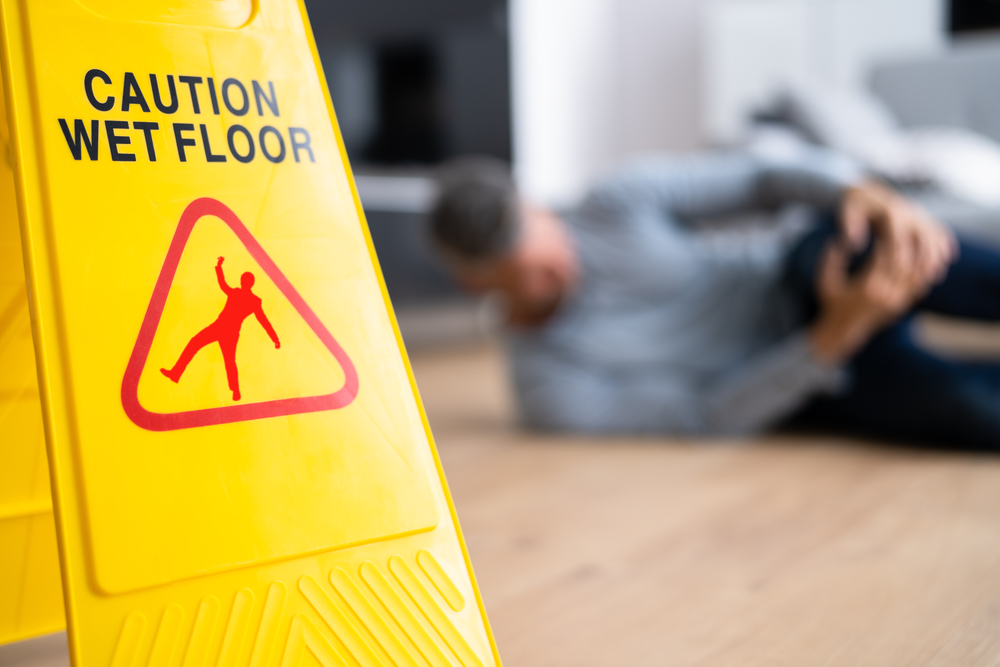
Not automatically. A wet floor sign is actually evidence that the owner knew about the hazard, which helps establish a dangerous condition. Whether it was visible, placed appropriately, and covered the full hazard all matter. Courts have found liability even with a sign present when placement was inadequate, or the hazard had persisted too long. A sign opens the analysis, but it does not close it.
Best Law handles slip and fall cases on a contingency fee basis. You pay no attorney fees unless the firm recovers compensation for you. Before you sign anything, Elissa Best explains the fee percentage and how litigation costs are handled in plain language. No surprise deductions, no ambiguity about the arrangement going in.

The Defense Already Has Its Version of What Happened
Within days of your fall, the property owner’s insurer began constructing a narrative designed to limit its exposure. It assigns fault to you, minimizes the hazard, and challenges the link between the fall and your injuries.
Countering that narrative requires a slip and fall attorney who knows how it gets built. Elissa Best spent years building those defenses before founding Best Law. We know which facts the other side will emphasize and where their arguments have gaps.
Call (424) 260-4649 or reach us online for a free consultation, and we will give you a clear, honest read on your case from someone who has worked the other side of it.
